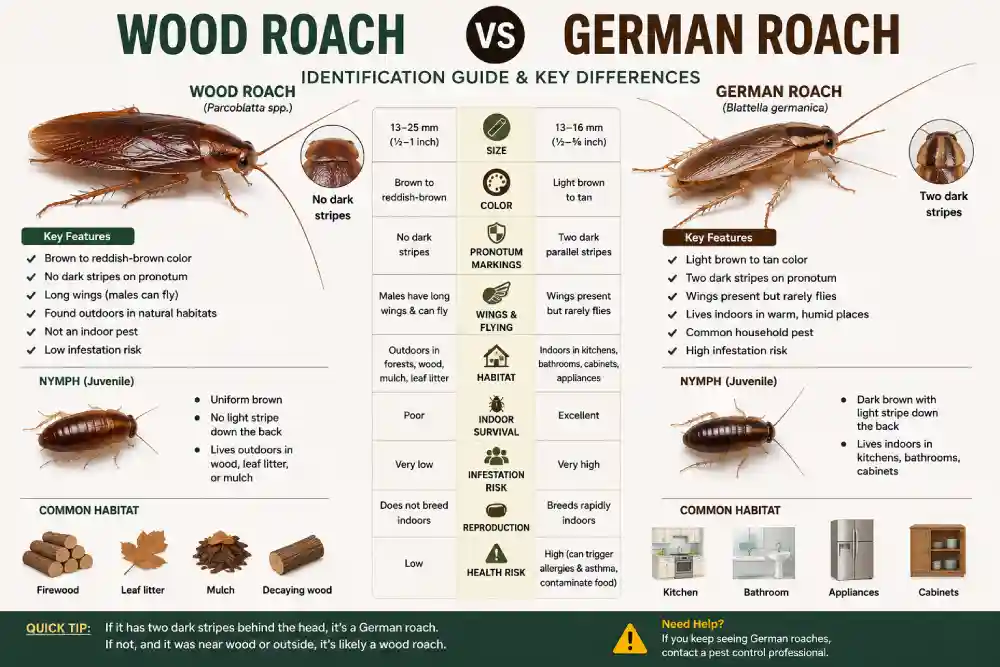
Wood Roach vs German Roach at a Glance
| Feature | Wood Roach | German Roach |
|---|---|---|
| Scientific Name | Parcoblatta spp. | Blattella germanica |
| Primary Habitat | Forests, logs, leaf litter | Kitchens, bathrooms, commercial buildings |
| Indoor Survival | Poor | Excellent |
| Infestation Risk | Very low | Extremely high |
| Reproduction Indoors | Rare | Continuous |
| Adult Size | ½–1 inch (13–25 mm) | ½–⅝ inch (13–16 mm) |
| Color | Chestnut to dark brown | Light tan to light brown |
| Head Markings | No parallel stripes | Two dark stripes behind the head |
| Flying Ability | Males fly well | Rarely flies; mostly runs |
| Active Location | Outdoors | Indoors |
| Health Risk | Low | High |
| Best Control | Exclusion and habitat management | Professional baiting and Integrated Pest Management (IPM) |
Quick Identification: If you see two dark parallel stripes behind the head, you're likely looking at a German cockroach, not a wood roach.
What Is a Wood Roach?
A wood roach (wood cockroach) is an outdoor cockroach belonging mainly to the genus Parcoblatta. Unlike household pest species, wood roaches naturally live in forests and contribute to the decomposition of organic matter.
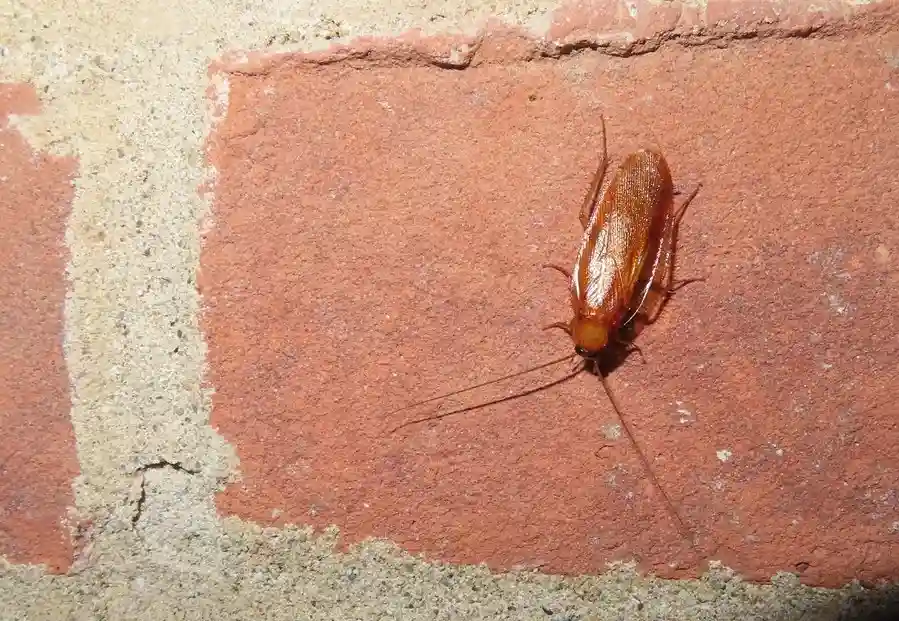
They are beneficial decomposers, breaking down dead wood, leaves, and other plant material, making them an important part of woodland ecosystems.
Common Wood Roach Species
- Pennsylvania Wood Cockroach (Parcoblatta pensylvanica)
- Virginia Wood Cockroach
- Florida Wood Cockroach
- Other Parcoblatta species across North America
Identification
- Chestnut or reddish-brown body
- Long antennae
- Males have long wings and can fly
- Females have shorter wings
- No dark stripes behind the head
- Usually found outdoors
Typical Habitat
- Firewood piles
- Decaying logs
- Tree bark
- Leaf litter
- Mulch beds
- Forest floors
What Is a German Roach?
The German cockroach (Blattella germanica) is one of the most common indoor cockroach species worldwide and a major household pest. Unlike wood roaches, German roaches depend on human-made environments where food, moisture, and warmth are readily available. Their rapid breeding cycle and ability to hide in tiny cracks make them difficult to eliminate once established.
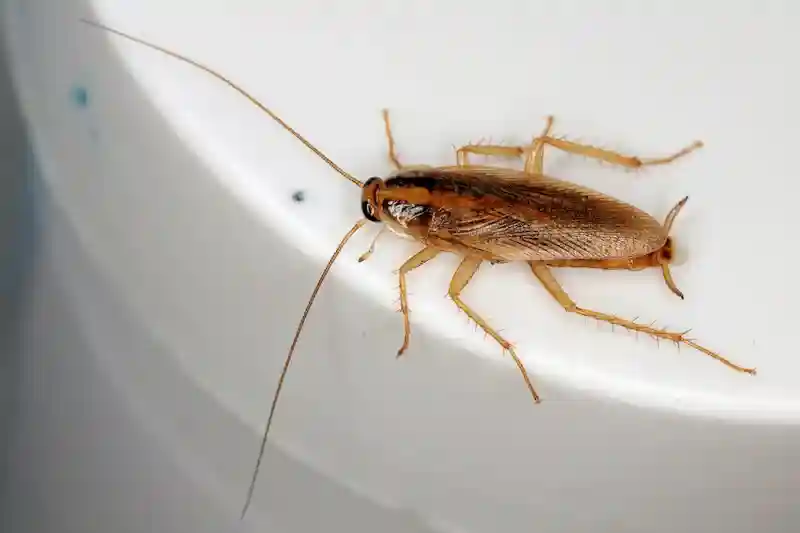
A single German cockroach is often a warning sign, especially if it's found in a kitchen, bathroom, pantry, or near appliances. Because they reproduce quickly, early identification and treatment are essential to prevent a full-scale infestation.
German Cockroach Identification
German cockroaches have several distinctive features that separate them from wood roaches and other common cockroach species.
Key Identification Features
- Light tan to light brown body
- Two dark parallel stripes on the pronotum (shield behind the head)
- Oval, flattened body shape
- Long antennae extending beyond the body
- Fully developed wings but rarely flies
- Fast runner that quickly hides when disturbed
Expert Tip: The two dark stripes behind the head are the fastest and most reliable way to identify a German cockroach.
Size and Appearance
| Feature | German Roach |
|---|---|
| Adult Length | 13–16 mm (½–⅝ inch) |
| Color | Light brown to tan |
| Pronotum | Two dark parallel stripes |
| Wings | Fully developed |
| Flight | Rare; primarily runs |
| Shape | Small, oval, and flattened |
Their flattened body allows them to squeeze into cracks as narrow as 1.6 mm (1/16 inch), making cabinets, wall voids, and appliance gaps ideal hiding places.
Habitat and Hiding Places
German cockroaches rarely survive outdoors for long. They thrive in warm, humid indoor environments where food and water are consistently available.
Common Indoor Hiding Spots
- Kitchen cabinets
- Under sinks
- Behind refrigerators
- Dishwashers
- Ovens and microwaves
- Pantry shelves
- Bathroom vanities
- Laundry rooms
- Utility closets
- Wall voids and electrical outlets
Because they are thigmotactic (preferring tight spaces where their bodies touch surfaces on multiple sides), they often remain hidden during the day and become active at night.
Wood Roach vs German Roach: Appearance DifferencesAlthough wood roaches and German roaches are similar in size, several physical traits make them easy to distinguish once you know what to look for. The pronotum (shield behind the head), body color, wing length, and flying behavior are the most reliable identification features.
Quick Rule: If the cockroach has two dark stripes behind its head, it is almost certainly a German cockroach. If those stripes are absent and the insect was found near firewood or outdoors, it's more likely a wood roach.
Size Comparison
Both species are relatively small, but wood roaches—especially males—can appear larger because of their longer wings.
| Characteristic | Wood Roach | German Roach |
|---|---|---|
| Adult Length | 13–25 mm (½–1 inch) | 13–16 mm (½–⅝ inch) |
| Body Shape | Slightly longer and slimmer | Compact and oval |
| Overall Appearance | More elongated | Shorter and broader |
Key Difference
Wood roaches often appear longer and leaner, while German roaches have a stockier, oval-shaped body designed for squeezing into narrow hiding places.
Color Comparison
Color alone isn't enough for identification because both species are shades of brown, but there are noticeable differences.
Wood Roach
- Chestnut brown
- Reddish-brown
- Dark brown
- More uniform body color
German Roach
- Light tan
- Golden brown
- Light brown
- Dark markings behind the head
The uniform coloration of wood roaches contrasts with the distinctive striped pronotum of German roaches.
Pronotum (Head Shield) Markings
The pronotum is the most reliable feature for distinguishing these two species.
| Wood Roach | German Roach |
|---|---|
| No dark parallel stripes | Two dark parallel stripes behind the head |
| Usually plain brown | Easily visible black or dark brown markings |
| Smooth appearance | High-contrast identification feature |
Why It Matters
Entomologists and pest control professionals often identify German cockroaches within seconds by looking for these two parallel stripes. Wood roaches completely lack this pattern.
Expert Tip: If you're unsure, focus on the area immediately behind the head—not the wings or abdomen.
Wings and Flying Ability
One of the biggest behavioral differences is flight.
Wood Roach
- Adult males have fully developed wings
- Strong, active flyers
- Frequently attracted to porch and outdoor lights
- May accidentally fly indoors through open doors or windows
German Roach
- Wings cover the abdomen
- Rarely flies under normal conditions
- Relies on running rather than flying
- Escapes quickly into cracks when disturbed
| Flight Ability | Wood Roach | German Roach |
|---|---|---|
| Adult Male | Excellent flyer | Rarely flies |
| Adult Female | Limited flight | Rarely flies |
| Attracted to Lights | Yes | No |
This difference explains why homeowners often find wood roaches near windows, patios, and exterior lights, while German roaches are usually discovered hiding under sinks or appliances.
Male vs. Female Appearance
Sexual differences are much more noticeable in wood roaches than in German cockroaches.
Wood Roach
Male
- Longer body
- Fully developed wings extending beyond the abdomen
- Strong flyer
Female
- Broader body
- Shorter wings
- Rarely flies
German Roach
Male and female German cockroaches look similar, although females tend to have a slightly wider abdomen, especially when carrying an ootheca (egg case).
Antennae and Body Shape
Both species use long antennae to detect food, moisture, and shelter, but their overall body proportions differ.
Wood Roach
- Longer, narrower body
- Less flattened profile
- Longer legs for moving through leaf litter and forest debris
German Roach
- Broad, flattened body
- Adapted to squeeze into tight indoor crevices
- Compact shape for hiding behind appliances and inside cabinets
Quick Identification Checklist
Use this checklist if you've found a cockroach in or around your home.
| Identification Sign | Wood Roach | German Roach |
|---|---|---|
| Two dark stripes behind the head | ❌ | ✅ |
| Uniform brown color | ✅ | ❌ |
| Frequently flies | ✅ | ❌ |
| Found near firewood or mulch | ✅ | ❌ |
| Found under kitchen appliances | ❌ | ✅ |
| Commonly found indoors year-round | ❌ | ✅ |
| Builds indoor infestations | ❌ | ✅ |
Wood Roach Nymph vs German Roach Nymph
Juvenile cockroaches, known as nymphs, are often more difficult to identify than adults because they lack fully developed wings. However, their body markings, color, habitat, and where they are found provide reliable clues. Identifying the correct nymph is especially important because German cockroach nymphs indicate active indoor breeding, while wood roach nymphs are rarely found developing inside homes.
Quick Answer: A German roach nymph has a dark body with a light stripe running down the middle of its back and is commonly found indoors. A wood roach nymph is more uniformly brown, lacks the distinct central stripe, and is usually found outdoors under logs, bark, or leaf litter.
Side-by-Side Comparison
| Feature | Wood Roach Nymph | German Roach Nymph |
|---|---|---|
| Habitat | Outdoors | Indoors |
| Body Color | Brown to dark brown | Dark brown to black |
| Distinctive Marking | Uniform coloration | Light tan stripe down the back |
| Wings | Wingless | Wingless |
| Indoor Breeding | Rare | Common |
| Common Location | Logs, mulch, leaf litter | Kitchens, bathrooms, cabinets |
| Infestation Indicator | No | Yes |
Appearance Differences
Although both nymphs are wingless, their markings make identification much easier.
Wood Roach Nymph
- Medium to dark brown body
- More uniform coloration
- No continuous light stripe along the back
- Slightly longer, slimmer body
- Legs often appear proportionally longer
Wood roach nymphs are adapted to outdoor environments where they feed on decaying plant material and hide beneath natural debris.
German Roach Nymph
- Dark brown to nearly black body
- Prominent light-colored stripe running lengthwise down the center of the back
- Oval, compact body
- Fast-moving and highly secretive
As German cockroach nymphs molt through several growth stages, the stripe remains one of the easiest identification features.
Expert Tip: If you notice several small, dark cockroaches with a pale stripe running down their backs inside your kitchen or bathroom, they are almost certainly German cockroach nymphs.
Habitat and Behavior
Where you find the nymph is often as important as its appearance.
Wood Roach Nymphs
Wood roach nymphs develop outdoors in moist, wooded habitats, including:
- Decaying logs
- Tree bark
- Leaf litter
- Firewood piles
- Mulch beds
- Forest floors
They rely on natural humidity and organic matter for food and shelter and rarely survive long indoors.
German Roach Nymphs
German cockroach nymphs remain close to food, water, and warmth throughout their development.
Common hiding places include:
- Under kitchen sinks
- Behind refrigerators
- Inside cabinets
- Around dishwashers
- Pantry shelves
- Bathroom vanities
- Wall voids
- Utility rooms
Finding multiple nymphs in these locations is a strong indicator of an established infestation.